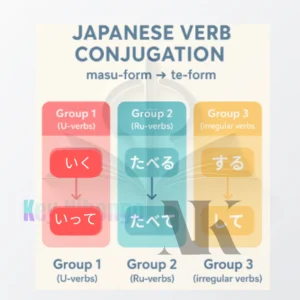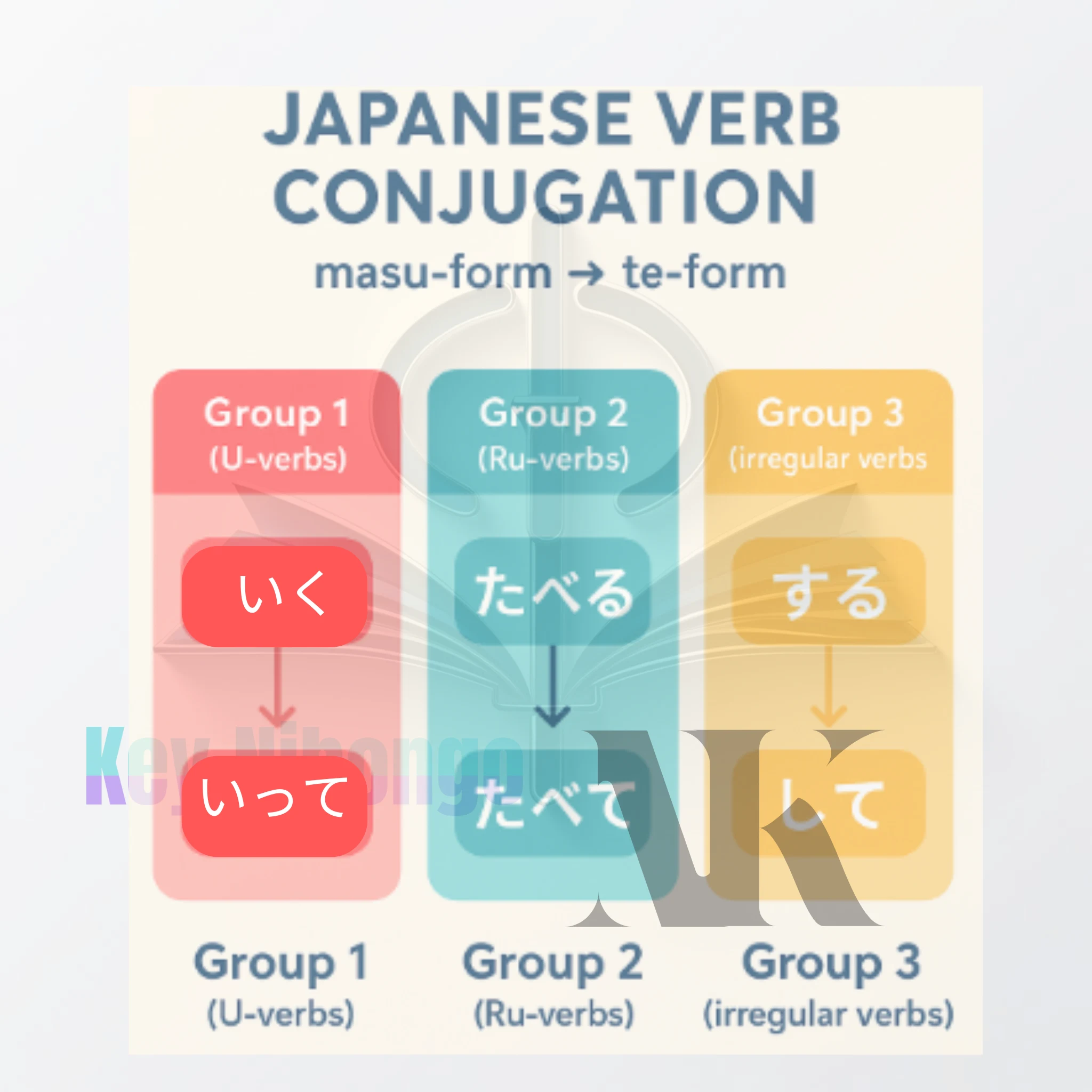
Japanese ます-form → て-form Converter
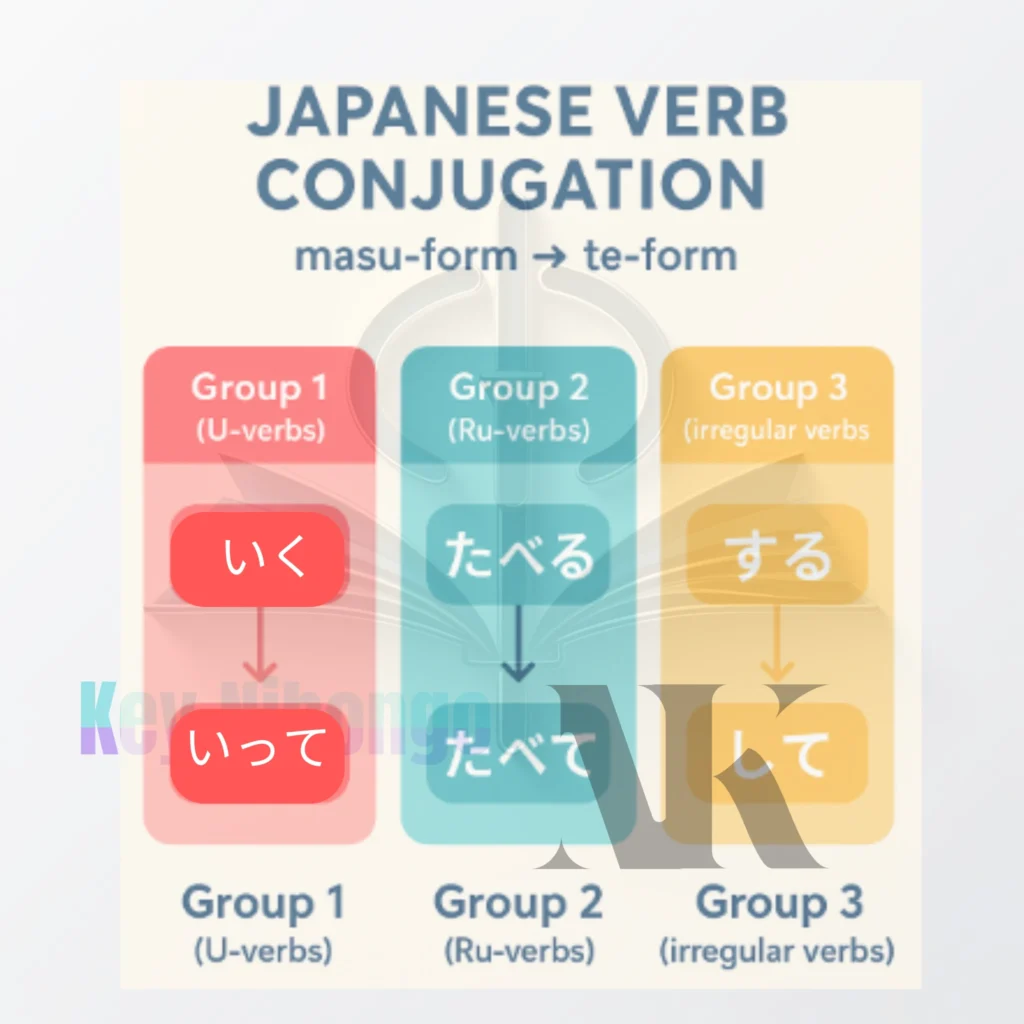
A Simple Guide to Changing from ます-Form to て-Form in Japanese
The Ultimate Guide to Converting Japanese ます-form to て-form: Learning how to conjugate Japanese verbs is an important step toward fluency. The て-form (te-form) is one of the most important to learn, although it can be difficult to get right. It’s used for many things, such as asking for something (〜てください), linking sentences, and saying that something is still going on.
You’re at the right place if you can easily switch from the polite ます-form (masu-form) to the て-form but can’t seem to do it. This article will show you how to change ます-form to て-form in a simple, step-by-step way, with clear principles and examples.
What Makes the て-Form So Important?
Let’s first talk about why this form is so important before we go into the conversion. In Japanese, the て-form is a very important part of grammar. You use it to:
Please listen to my requests: 聞いてください
Connect actions (and/then): I watched a movie and then ate.
Say that something is happening right now (〜ている): 雨が降っています (It is raining.)
Say softly, “ここに座って” (Sit here).
Visit here:
State reasons (〜て): It was hot, thus I opened the window.
Learning how to change the て-form will greatly improve your ability to speak Japanese naturally.
Conclusion
At first, converting ます-form to て-form may appear difficult, but by using the dictionary form as a bridge, the method makes sense and is consistent. Remember the two irregular verbs and concentrate on learning the most complicated rules for Group 1 (U-verbs).
Practice is the best approach to reinforce this understanding. Try converting the verbs you are familiar with from your vocabulary list or textbook. You will be confidently employing the versatile て-form before you even realize it!
Are you prepared for the next phase? After you have mastered the て-form, you can utilize the た-form (ta-form), which has almost the same conjugation rules, to produce the past tense!