100 Most Common Japanese Words You Need to Know
🌸 Introduction: Why Learn the Most Common Japanese Words?
If you’re starting your Japanese learning journey, mastering the most common Japanese words is the fastest way to understand real-life conversations.
Why? These 100 essential Japanese words appear in almost every sentence, from greetings to shopping, travel, and casual chat.
Whether your goal is to speak fluently, travel to Japan, or understand anime without subtitles, this list will give you a solid foundation in basic Japanese vocabulary that native speakers use daily.
🧠 Step 1: Understand How Japanese Vocabulary Works
Before diving into the list, let’s clarify something: Japanese words fall into three main types —
| Word Type | Script | Example | Meaning |
|---|---|---|---|
| Native Japanese words (和語) | Hiragana/Kanji | たべる (taberu) | to eat |
| Chinese-origin words (漢語) | Kanji | 学生 (gakusei) | student |
| Loanwords (外来語) | Katakana | コンピュータ (konpyūta) | computer |
Learning from native frequency gives you real-world fluency—not just textbook memorization.
📘 Step 2: 100 Most Common Japanese Words (With Romaji and Meaning)
Here’s your ultimate beginner-friendly list of the 100 most used Japanese words—grouped by category for easier memorization.
🗣️ 1. Basic Japanese Words for Daily Conversation
| Japanese | Romaji | English |
|---|---|---|
| はい | hai | Yes |
| いいえ | iie | No |
| ありがとう | arigatou | Thank you |
| すみません | sumimasen | Excuse me / Sorry |
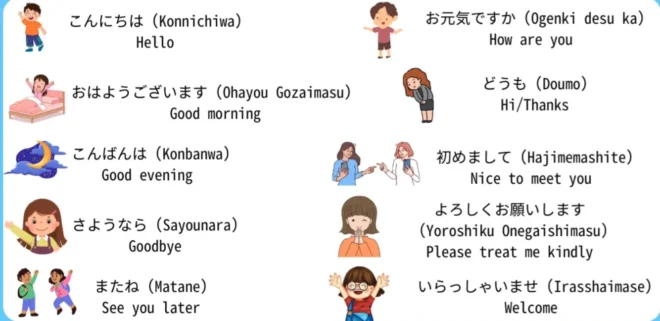
| おはよう | ohayou | Good morning |
| こんにちは | konnichiwa | Hello / Good afternoon |
| こんばんは | konbanwa | Good evening |
| さようなら | sayounara | Goodbye |
| おねがいします | onegaishimasu | Please |
| わかりません | wakarimasen | I don’t understand |
🕰️ 2. Time and Day Vocabulary
| Japanese | Romaji | English |
|---|---|---|
| きょう | kyou | today |
| あした | ashita | tomorrow |
| きのう | kinou | yesterday |
| いま | ima | now |
| あさ | asa | morning |
| よる | yoru | night |
| とき | toki | time |
| じかん | jikan | hour |
| ひる | hiru | noon |
| しゅうまつ | shuumatsu | weekend |
🏠 3. People and Family Words
| Japanese | Romaji | English |
|---|---|---|
| わたし | watashi | I / me |
| あなた | anata | you |
| かれ | kare | he |
| かのじょ | kanojo | she |
| ともだち | tomodachi | friend |
| おとうさん | otousan | father |
| おかあさん | okaasan | mother |
| あに | ani | older brother |
| あね | ane | older sister |
| こども | kodomo | child |
🍱 4. Food and Drink
| Japanese | Romaji | English |
|---|---|---|
| たべもの | tabemono | food |
| のみもの | nomimono | drink |
| みず | mizu | water |
| ごはん | gohan | rice / meal |
| すし | sushi | sushi |
| にく | niku | meat |
| やさい | yasai | vegetables |
| くだもの | kudamono | fruit |
| コーヒー | koohii | coffee |
| おちゃ | ocha | tea |
🚶♂️ 5. Common Verbs You’ll Hear Everywhere
| Japanese | Romaji | English |
|---|---|---|
| する | suru | to do |
| いく | iku | to go |
| くる | kuru | to come |
| たべる | taberu | to eat |
| のむ | nomu | to drink |
| みる | miru | to see / watch |
| はなす | hanasu | to speak |
| きく | kiku | to listen / ask |
| よむ | yomu | to read |
| かく | kaku | to write |
💡 Tip: Learn verbs in their ます (masu) form for polite conversation. Example: たべます (tabemasu) = eat (polite).
🏠 6. Places Around You
| Japanese | Romaji | English |
|---|---|---|
| がっこう | gakkou | school |
| いえ | ie | house |
| えき | eki | station |
| レストラン | resutoran | restaurant |
| コンビニ | konbini | convenience store |
| まち | machi | town |
| くに | kuni | country |
| みせ | mise | shop |
| こうえん | kouen | park |
| びょういん | byouin | hospital |
🕊️ 7. Common Adjectives for Description
| Japanese | Romaji | English |
|---|---|---|
| おおきい | ookii | big |
| ちいさい | chiisai | small |
| あたらしい | atarashii | new |
| ふるい | furui | old |
| たかい | takai | tall / expensive |
| やすい | yasui | cheap |
| おいしい | oishii | delicious |
| かわいい | kawaii | cute |
| いそがしい | isogashii | busy |
| しずか | shizuka | quiet |
🗣️ 8. Pronouns and Question Words
| Japanese | Romaji | English |
|---|---|---|
| だれ | dare | who |
| なに | nani | what |
| どこ | doko | where |
| いつ | itsu | when |
| なぜ | naze | why |
| どうして | doushite | how come |
| どの | dono | which |
| これ | kore | this |
| それ | sore | that |
| あれ | are | that (over there) |
💬 9. Common Expressions and Phrases
| Japanese | Romaji | English |
|---|---|---|
| おげんきですか | ogenki desu ka | How are you? |
| げんきです | genki desu | I’m fine |
| はじめまして | hajimemashite | Nice to meet you |
| どうぞ | douzo | Here you go |
| だいじょうぶ | daijoubu | It’s okay |
| すごい | sugoi | Amazing! |
| そうです。 | sou desu | That’s right |
| ほんとう | hontou | Really? |
| ちょっとまって | chotto matte | Wait a moment |
| わかりました | wakarimashita | Understood |
💰 10. Numbers and Counting Words
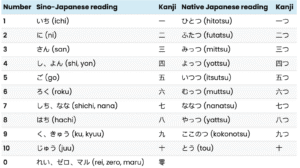
| Japanese | Romaji | English |
|---|---|---|
| いち | ichi | one |
| に | ni | two |
| さん | san | three |
| よん / し | yon / shi | four |
| ご | go | five |
| ろく | roku | six |
| なな / しち | nana/shichi | seven |
| はち | hachi | eight |
| きゅう | kyuu | nine |
| じゅう | juu | ten |
🔢 Once you know 1–10, you can easily form higher numbers in Japanese (e.g., じゅういち = 11, にじゅう = 20).
📖 Step 3: How to Remember These Words Faster
Here are three smart memory tips:
-
Use flashcards daily—apps like Anki or Quizlet are perfect.
-
Learn with example sentences—it helps you remember context.
-
Practice listening and speaking—repetition equals fluency.
Example sentence:
-
きょう は がっこう に いきます。 (Kyou wa gakkou ni ikimasu.) → I’m going to school today.
Also, visit here:
🗾 Step 4: Next Steps After the Top 100 Words
Once you master these common Japanese words, you’ll understand over 70% of daily conversation in Japan.
Next, you can move to:
-
Basic Japanese grammar (particles like は, を, に)
-
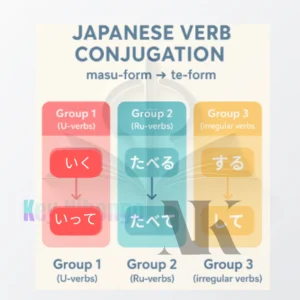
Verb conjugation (Masu, Te, and Ta forms)
-
Listening to native media (anime, news, podcasts)
🌺 Conclusion: Build Your Japanese Foundation Word by Word
Learning Japanese starts with vocabulary—the building blocks of all fluency.
These 100 most common Japanese words are your gateway to understanding native speech, forming your own sentences, and enjoying Japanese culture fully.
🌸 Start using them in daily phrases, and soon, Japanese won’t feel like a foreign language — it’ll feel natural.