🔢 Japanese Numbers 1–100: Complete Guide with Pronunciation
Counting in Japanese is one of the first—and most fun—things every learner masters. Whether you’re ordering at a restaurant, counting money, or telling your age, numbers are everywhere in daily Japanese life.
This guide covers everything you need to count from 1 to 100 in Japanese—with pronunciations, examples, counting patterns, and tips to sound natural.
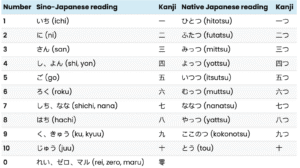
🎌 The Basics: Japanese Numbers 1–10
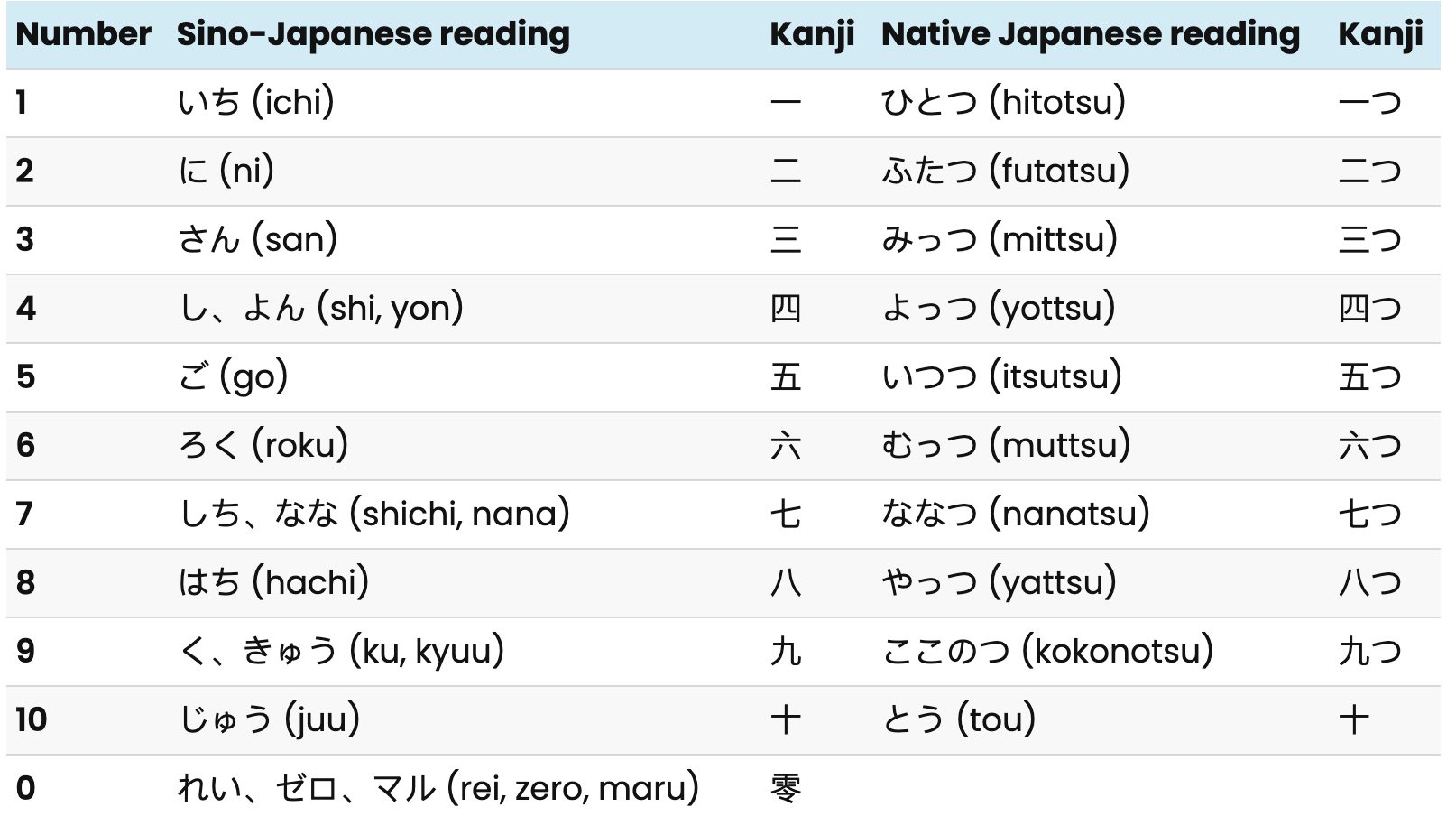
Japanese uses a base-10 system (decimal) just like English. Once you learn 1–10, you can build all the rest easily.
| Number | Kanji | Hiragana | Romaji | Pronunciation |
|---|---|---|---|---|
| 1 | 一 | いち | ichi | ee-chee |
| 2 | 二 | に | ni | ni |
| 3 | 三 | さん | san | san |
| 4 | 四 | し / よん | shi/yon | shee / yohn |
| 5 | 五 | ご | go | go |
| 6 | 六 | ろく | roku | roh-koo |
| 7 | 七 | しち / なな | shichi/nana | shee-chee / nah-nah |
| 8 | 八 | はち | hachi | hah-chee |
| 9 | 九 | きゅう / く | kyuu / ku | kyoo / koo |
| 10 | 十 | じゅう | juu | joo |
🧠 Tip:
4 (shi) and 7 (shichi) are sometimes replaced with yon and nana — because “shi” sounds like “death” (死).
🧮 Counting from 11 to 19
In Japanese, numbers after 10 are built logically:
“10 + [number]” → just add after juu (十)
| Number | Japanese | Romaji | English |
|---|---|---|---|
| 11 | 十一 | juu ichi | 10 + 1 |
| 12 | 十二 | juu ni | 10 + 2 |
| 13 | 十三 | juu san | 10 + 3 |
| 14 | 十四 | juu yon | 10 + 4 |
| 15 | 十五 | juu go | 10 + 5 |
| 16 | 十六 | juu roku | 10 + 6 |
| 17 | 十七 | juu nana | 10 + 7 |
| 18 | 十八 | juu hachi | 10 + 8 |
| 19 | 十九 | juu kyuu | 10 + 9 |
So easy, right? Once you know 1–10, you can count up to 99 by simple addition patterns!
💯 Tens in Japanese (20, 30, 40…90)
For 20, 30, 40, etc., simply say
“[multiple of 10] × juu (十)”
| Number | Japanese | Romaji | English |
|---|---|---|---|
| 20 | 二十 | ni-juu | 2 × 10 |
| 30 | 三十 | san-juu | 3 × 10 |
| 40 | 四十 | yon-juu | 4 × 10 |
| 50 | 五十 | go-juu | 5 × 10 |
| 60 | 六十 | roku-juu | 6 × 10 |
| 70 | 七十 | nana-juu | 7 × 10 |
| 80 | 八十 | hachi-juu | 8 × 10 |
| 90 | 九十 | kyuu-juu | 9 × 10 |
🧩 Numbers 21–99
Combine tens + ones:
[Tens] + [Ones]
Examples:
-
21 → 二十一 (ni-juu ichi)
-
35 → 三十五 (san-juu go)
-
47 → 四十七 (yon-juu nana)
-
68 → 六十八 (roku-juu hachi)
-
99 → 九十九 (kyuu-juu kyuu)
Simple formula:
(Tens × juu) + Ones
Also, visit here:
💯 100 in Japanese
| Number | Kanji | Hiragana | Romaji | Pronunciation |
|---|---|---|---|---|
| 100 | 百 | ひゃく | hyaku | hyah-koo |
🔍 Fun Fact:
The word hyaku (百) forms the base for higher numbers —
200 = nihyaku, 300 = sanbyaku, 400 = yonhyaku, etc.
📊 Chart: Japanese Numbers 1–100
| Range | Pattern | Example |
|---|---|---|
| 1–10 | Simple | ichi, ni, san… |
| 11–19 | juu + number | juu ichi (11), juu go (15) |
| 20–90 | number + juu | ni juu (20), san juu (30) |
| 21–99 | number + juu + number | yon juu nana (47), roku juu ni (62) |
| 100 | hyaku | hyaku (100) |
🗾 Everyday Use of Numbers
| Situation | Example | English |
|---|---|---|
| Age | わたしは二十五歳です。 (Watashi wa nijū go sai desu) | I am 25 years old. |
| Money | 三千円です。 (Sanzen en desu) | It’s 3,000 yen. |
| Time | 九時です。 (Ku-ji desu) | It’s 9 o’clock. |
| Dates | 十月二日 (Jūgatsu futsuka) | October 2nd |
💡 Counting Tips
✅ Use “yon” instead of “shi” for 4.
✅ Use “nana” instead of “shichi” for 7.
✅ Always pronounce vowels clearly—Japanese has flat, rhythmic intonation.
✅ For higher numbers, remember:
-
100 = hyaku
-
1,000 = sen
-
10,000 = man
🧠 Quick Mnemonics
| Number | Mnemonic |
|---|---|
| 1 (ichi) | “Ichi, one sandwich.” |
| 2 (ni) | “Knee for two legs.” |
| 3 (san) | “The sun has 3 rays.” |
| 4 (yon) | “Four yons in a row.” |
| 5 (go) | “Go five steps!” |
| 6 (roku) | “Rock you!” |
| 7 (nana) | “Lucky 7—nana!” |
| 8 (hachi) | “Hatch eight eggs.” |
| 9 (kyuu) | “Queue of 9 people.” |
| 10 (juu) | “Juul pods = 10 out of 10.” 😄 |
🌸 Conclusion: Count Like a Native
Counting in Japanese may seem new at first, but it’s beautifully logical and consistent. Once you understand the pattern behind juu (10) and hyaku (100), you can count to any number effortlessly.
Start small—practice 1–10 until natural, then expand daily.
Before long, you’ll be ordering sushi 🍣, buying tickets 🎫, and reading prices 💴 like a local!
🎯 Goal: Master the rhythm and pronunciation — that’s the real secret to sounding fluent.