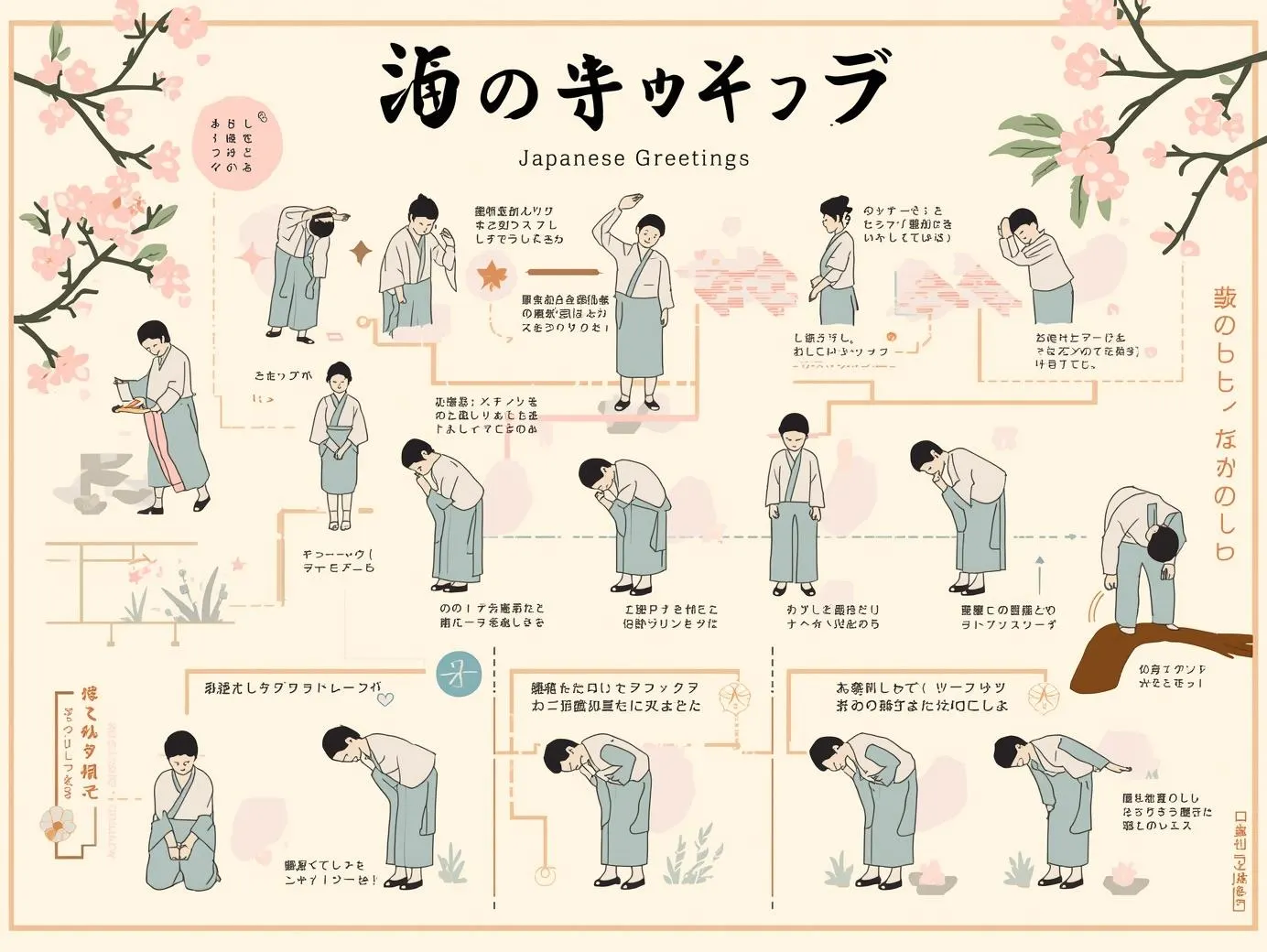
🌸 Japanese Greetings: 30+ Ways to Say Hello and Goodbye
In Japan, greetings are more than words—they’re expressions of respect, emotion, and cultural identity. Whether you’re meeting someone for the first time, starting work, or saying goodbye to friends, the right greeting makes a strong impression.
This complete guide covers 30+ authentic Japanese greetings, from casual to formal—with meanings, examples, and pronunciation tips.
🏮 Why Japanese Greetings Matter
In Japanese culture, greetings are seen as a reflection of your attitude.
A polite “Ohayou gozaimasu” or a heartfelt “Arigatou gozaimasu” instantly shows respect and sincerity.
🌸 Did you know? The Japanese word for “greeting” — aisatsu (挨拶) — literally means “mutual approach.” It’s about connecting hearts, not just exchanging words.
👋 Section 1: Common Ways to Say “Hello” in Japanese
| Japanese | Romaji | English | Usage |
|---|---|---|---|
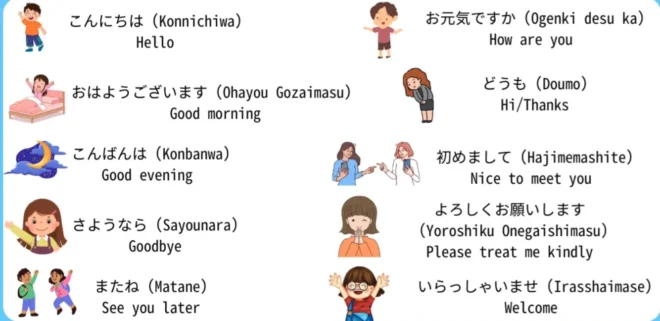
| こんにちは | Konnichiwa | Hello / Good afternoon | General daytime greeting |
| おはよう | Ohayou | Morning! | Casual morning |
| おはようございます。 | Ohayou gozaimasu | Good morning (polite) | Formal or workplace |
| こんばんは | Konbanwa | Good evening | Used after sunset |
| やあ / よっ! | Yaa / Yo! | Hey! | Very casual |
| もしもし | Moshi moshi | Hello (on phone) | Only on phone calls |
| 久しぶり! | Hisashiburi! | Long time no see! | When meeting someone after a while |
| 元気? | Genki? | How are you? | Informal |
| お元気ですか? | Ogenki desu ka? | How are you? (polite) | Formal conversation |
| どうも | Doumo | Hi / Thanks / Hello | Versatile and casual |
💬 Cultural Tip: In Japan, saying “Hello” is often accompanied by a bow (お辞儀, ojigi) — even a small one shows respect.
🏯 Section 2: Saying “Goodbye” in Japanese
| Japanese | Romaji | English | Usage |
|---|---|---|---|
| さようなら | Sayounara | Goodbye | Neutral, everyday |
| じゃね! | Ja ne! | See you! | Casual |
| じゃまた! | Ja mata! | See you later! | Informal friends |
| またね! | Mata ne! | See you again! | Friendly and common |
| バイバイ | Bai bai | Bye-bye | Informal, borrowed from English |
| ではまた | Dewa mata | Until next time | Polite version of “See you” |
| おやすみ / おやすみなさい | Oyasumi / Oyasuminasai | Good night | Casual/polite |
| 行ってきます。 | Ittekimasu | I’m leaving (home/work) | When you leave your house |
| 行ってらっしゃい | Itterasshai | Take care / See you later | Said to someone leaving |
| お疲れ様です。 | Otsukaresama desu | Thank you for your hard work / Goodbye (workplace) | Business and daily life |
| ご苦労様です | Gokurousama desu | Thanks for your effort (superior to subordinate) | Workplace hierarchy |
🏮 Cultural Note: “Sayounara” sounds final — like a long goodbye. In everyday life, Japanese people more often use “Mata ne!” or “Ja ne!”
💬 Section 3: Polite and Business Greetings
In Japan, politeness is essential in work, customer service, and meetings.
Also, visit here:
| Japanese | Romaji | English Meaning | Context |
|---|---|---|---|
| いつもお世話になっております。 | Itsumo osewa ni natte orimasu | Thank you for your continued support | Business email or call |
| よろしくお願いします | Yoroshiku onegaishimasu | Please treat me well./ Thank you in advance | Meeting someone or ending a request |
| はじめまして | Hajimemashite | Nice to meet you | First meeting |
| お疲れ様でした。 | Otsukaresama deshita | Thank you for your work (past tense) | End of workday |
| 失礼します。 | Shitsurei shimasu | Excuse me / Goodbye (polite) | Entering/leaving an office |
💼 Tip: In Japanese business culture, greetings set the tone of professionalism — always bow slightly when saying “yoroshiku onegaishimasu.”
🌸 Section 4: Greetings by Time of Day
| Time | Japanese Greeting | Romaji | English |
|---|---|---|---|
| Morning | おはよう / おはようございます | Ohayou / Ohayou gozaimasu | Good morning |
| Afternoon | こんにちは | Konnichiwa | Good afternoon |
| Evening | こんばんは | Konbanwa | Good evening |
| Night (farewell) | おやすみなさい | Oyasuminasai | Good night |
🕓 Pro Tip: Japanese greetings depend on time — “Konnichiwa” is rarely used before 10 a.m. or after sunset.
🧘 Section 5: Casual Slang Greetings (for Friends)
| Japanese | Romaji | English | Usage |
|---|---|---|---|
| よ! | Yo! | Hey! | Friendly greeting |
| おっす! | Ossu! | What’s up? | Used among guys |
| 元気? | Genki? | Are you good? | Informal |
| 調子どう? | Choushi dou? | How’s it going? | Casual |
| やっほー! | Yahoo! | Hi there! | Playful or friendly |
💌 Section 6: Regional and Unique Greetings
Japan has local dialects (方言 hougen)—greetings vary by region:
| Region | Greetings, | Meaning |
|---|---|---|
| Kansai | まいど! (Maido!) | Hello / Thanks (Osaka-style) |
| Tohoku | おばんです (Obandesu) | Good evening |
| Okinawa | はいたい (Haitai) / ハイサイ (Haisai) | Hello (female/male) |
| Nagoya | よう! (You!) | Hi / Hey (casual) |
🗾 Fun Fact: Regional greetings are often used in TV dramas, anime, and variety shows — they reflect Japan’s diverse culture.
🌺 Conclusion: Greeting the Japanese Way
Mastering Japanese greetings is your first step toward cultural fluency. Whether you’re saying “Ohayou gozaimasu” to your boss, “Mata ne” to a friend, or “Ittekimasu” as you leave home, every greeting builds connection and respect.
🌸 Remember: Japanese communication isn’t just about words — it’s about warmth, humility, and sincerity.
A simple bow with the right greeting can say more than a thousand sentences.
So, next time you meet someone in Japan, smile, bow lightly, and say —
「こんにちは!」 (Konnichiwa!)